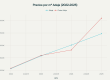

Tenerife property market trends become useful when they help you ask better questions about a particular purchase. A headline about rising prices is not a valuation. A busy tourism season is not proof that an individual property can operate lawfully or produce the income in a sales presentation.
Reviewed on 29 October 2026. References to 2027 describe preparation and scenarios, rather than predicted market growth. The images are identified in their captions and credits; they are not sale particulars.
Renova focuses on selected property projects and coordinates legal matters with collaborating lawyers. We help organise the evidence behind an opportunity. Legal advice, technical inspection and tax conclusions remain the work of the relevant appointed professionals.
This guide explains how to build a practical market review. Instead of treating a general growth percentage as an investment plan, it connects indicators to the decisions about price, timing, cost and use that a buyer actually faces.
Choose indicators that answer a question
Begin with your intended use and holding period. A home for personal occupation, a rental asset and a plot project need different evidence. The relevant market is also more specific than the island’s name: location, product, condition and legal position influence the comparison.
Write down what you need to know before collecting statistics. You may want to understand price movement, competing supply, the time needed to sell or the cost of preparing an asset. Different sources answer different questions, and none should silently stand in for all the others.
Read Tenerife property market trends at the right scale
The INE’s housing price index methodology describes an aggregate measure with results at national and autonomous community level. It does not publish a separate index for every street or for each type of villa in Tenerife.
Use the geographic scale in the description of a result. A Canary Islands figure should not be relabelled as the rise in Costa Adeje. Equally, a municipal average is not the price of every neighbourhood within that municipality.
This distinction helps prevent a common error: applying the latest regional growth rate directly to a seller’s asking price. A property may have a different condition, use, documentation or buyer audience from the transactions represented by the indicator.
Separate asking prices, appraisals and completed transactions
Advertisements show what sellers seek at a particular time. Appraisals describe valuations within their methodology and sample. Completed transactions record an agreed exchange, with their own dates and coverage. Comparing them without labels creates a misleading picture.
The ISTAC appraised housing value statistics provide an official reference for that measure. Read the scope and period before using a figure. An appraisal average is not evidence that every listed home will sell at the same amount per square metre.
| Indicator | Useful question | What it cannot settle |
|---|---|---|
| Advertised price | What competing sellers currently request | The final negotiated price |
| Appraised value | How the measured sample is valued | The value of an uninspected individual asset |
| Transaction index | How an aggregate series changes over time | The future return from your purchase |
| Project budget | What defined work currently costs | Costs excluded from the scope |
Build a small comparable property file
A useful shortlist records location, area, condition, outdoor space, parking, community facilities and the intended lawful use. Explain how the reported area is measured. An internal floor area and a total including terraces should not be treated as equivalent.
Keep the listing date and any observed price changes. A property that remains advertised is different evidence from a completed sale. Where transaction information is available, confirm what it covers before using it as a comparable.
Record the differences rather than forcing every home into one average. A lift, a regularised alteration or a substantial pending community project can change the practical comparison. The aim is to understand the available choices, not produce a false precision.
Track cost changes alongside price changes
Market interest can rise while the cost of preparing a property also rises. Obtain current quotations for the work your plan needs. Specify materials, scope, exclusions, professional fees and relevant permissions so that different proposals can be compared.
Separate the purchase price from acquisition taxes, transaction costs, immediate work and ongoing expenditure. A higher expected exit price does not automatically improve the result if additional capital and time are required to reach it.
If a budget is old, retain its date and purpose. Do not describe it as a current quotation because it appears in a recent presentation. A 2027 plan needs a process for refreshing assumptions before the commitment is made.
Interpret demand through the actual product
General demand and the buyer for a particular asset are different questions. Identify who is likely to use the home, what they require and which alternatives they can choose. A tourism property, a residential apartment and a plot do not share an identical customer.
For letting, examine the available calendar and realistic operation. Personal stays, repairs and preparation reduce the dates available. Gross advertised income should not be confused with the net amount retained after the relevant expenses.
For resale, allow for the time needed to prepare and market the property. A desirable area can still contain assets that require work or a different pricing approach. Test a slower sale and a lower offer before treating the project as affordable.
Keep permitted use in the market review
A property’s attractiveness does not establish permission for holiday letting. Regional tourism law, municipal planning, the building and community circumstances may all matter. The review should concern the proposed owner, operator and activity.
Our updated Canary Islands holiday letting guide explains the main questions after the 2025 law and 2026 amendments. An individual property still needs its own assessment.
If income depends on an unconfirmed use, keep that condition visible. Compare a scenario without the expected activity. A market trend cannot resolve a missing permission or turn a neighbouring listing into legal evidence for your property.
Create a review dashboard with dates
Use a short table rather than a collection of unrelated headlines. Record the source, release date, reference period, geographic scope and decision it informs. Update each series at its own frequency instead of presenting different periods as one current snapshot.
- Prices: identify the measure and geographic coverage.
- Competing assets: record product, condition and asking terms.
- Costs: distinguish current quotations from estimates.
- Legal use: list documents reviewed and unresolved conditions.
- Timing: identify dependencies and a less favourable timetable.
- Decision: state what evidence is needed before the next commitment.
Give each unresolved issue an owner. A technician may need to explain an alteration, while the lawyer assesses its contractual consequences. The dashboard should show the issue’s status rather than assuming the first document received closes it.
Use scenarios for 2027 instead of a market promise
Prepare a base case and a less favourable case. Vary income, maintenance, sale timing and additional expenditure. Explain which conditions need to hold for each result. This makes the model more useful than a single attractive return percentage.
Choose decision points at which assumptions will be refreshed. Before reservation, before a major contract and before starting work are practical moments to review material evidence. The appropriate conditions should be agreed with your professional team.
Tenerife property market trends can inform those decisions, but they cannot predict every outcome. Keep the model connected to the specific asset and your ability to hold it if the timetable changes.
Selected projects require their own evidence
Renova’s Yaco II investor information concerns plots in San Isidro. The principal route is selling plots. Villa development is a secondary option that needs current construction and technical budgets.
Renova contributes designs, renders and the presentation of the project. Asten coordinates the commercial sale of its plots and villas. These roles explain the proposal, while an investor still needs the underlying planning, legal and economic review.
The private dossier supplies financial assumptions for interested investors. Public images illustrate a design intention and do not establish a final specification, delivery date or return. A broad island trend should not be used to fill a gap in the project’s evidence.
A practical example of updating the review
Imagine that you shortlisted a home because its distribution appeared suitable and the advertised price fitted your initial budget. A later inspection identifies work that was not in the first estimate. Meanwhile, a nearby listing reduces its asking price. These are two separate pieces of information, and neither should be hidden inside a general market average.
First, ask the technician to explain the required work and obtain a properly scoped quotation. Update the acquisition budget with that evidence. Then examine whether the nearby listing is genuinely comparable in size, condition, legal position and included features. An asking price reduction may be relevant without proving a completed transaction at that level.
Finally, review the decision with the corrected information. You might negotiate different terms, retain a larger reserve or decide that the property no longer fits the brief. The point of the dashboard is to make that change understandable, rather than defend the original conclusion at any cost.
Record the date of the review and the documents supporting it. If another participant joins the process, they should be able to see why the budget or offer changed. This gives Tenerife property market trends a practical place in the decision while keeping the individual asset’s evidence at the centre.
How to take the next step
Send a focused enquiry through the Renova contact form. Explain the intended use, approximate holding period and the decision you are considering. Renova can organise initial information and coordinate legal questions with collaborating lawyers.
Frequently asked questions
Can Tenerife property market trends value a specific villa?
They provide context. The individual valuation needs relevant comparables, condition, documentation and the property’s particular features. An aggregate index is not a substitute for that work.
Should a rising market remove the need for a reserve?
No. Repairs, delays and operating costs can arise regardless of the direction of a general index. Assess the capital needed for the actual project and a less favourable scenario.
How often should the review be updated?
Use each source’s publication schedule and revisit material assumptions before committing. A new quotation or legal finding may justify an update even when the market statistics have not changed.
Who provides the legal conclusions?
Collaborating lawyers provide legal advice and representation within their appointment. Renova coordinates information and selected project enquiries. Technical and tax decisions require the relevant professionals.