
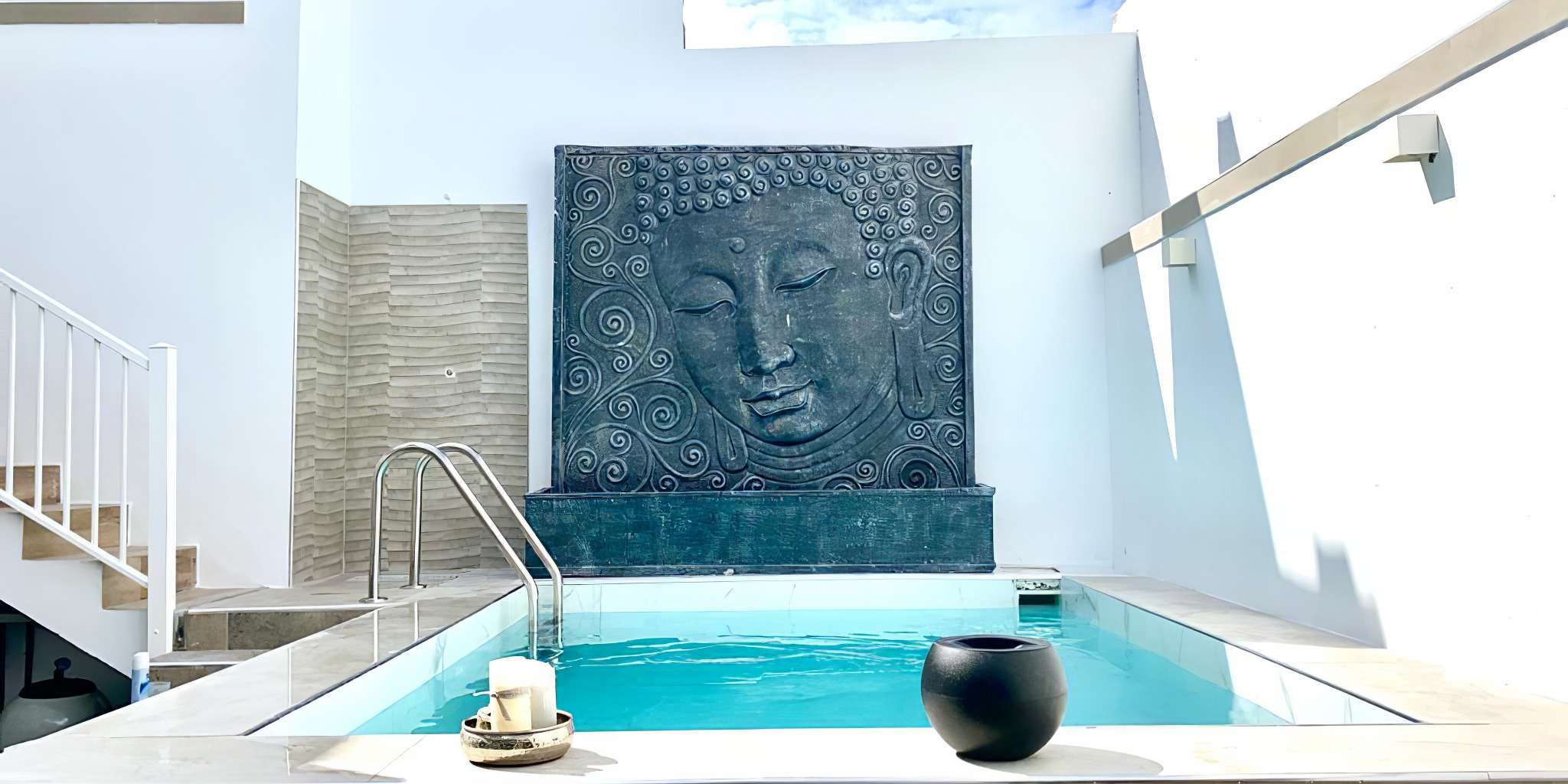
Tenerife vacation properties should be assessed through lawful use, a realistic calendar and complete operating costs. An attractive photograph or a suggested annual return does not establish the result of a particular home. The useful question is what remains after the actual obligations, expenses and periods without guests.
Reviewed on 29 October 2026. References to 2027 are planning scenarios, not a forecast of rental income. The images are identified in their captions and credits; they are not sale particulars.
Renova focuses on selected property projects and coordinates legal matters with collaborating lawyers. Villa Dolce Vita is part of our accommodation activity. The review of an investor’s property still requires the legal, technical and tax work appropriate to that asset.
This guide replaces universal yield claims with a practical way to organise the calculation. It separates buying a property, preparing it, operating it and eventually selling it. Each stage has its own evidence and cash requirements.
Define the purpose of your Tenerife vacation properties search
Decide whether the main objective is personal use, letting or a combination. Personal stays reduce the commercial calendar and may fall during dates that would otherwise be attractive to guests. That is a choice to include in the plan, rather than an inconvenience to hide.
Set the expected holding period and the amount you can retain for maintenance and unexpected expenditure. A property that is affordable at purchase may need a larger operating reserve than expected. The acquisition budget and the ownership budget should work together.
Write down the conditions that would make an opportunity unsuitable. Unconfirmed use, access limitations or major work may be decisive for your objective. Establish those limits before relying on a sales projection.
Verify the activity before forecasting income
Tourist demand does not itself authorise holiday letting. The Canary Islands tourism framework, municipal planning, the building and community circumstances can all be relevant. Ownership, operation and the history of the activity may affect the analysis.
The official starting points include Law 6/2025 on tourist use of housing and the 2026 amendments. Our updated practical guide helps organise the main questions.
Request a property specific review. An existing advertisement, a neighbouring listing or a booking history is not a substitute for the relevant documents. If the investment depends on tourist income, keep that dependency visible until the proposed activity has been assessed.
Inspect the product guests would actually use
Check the arrival route, bedrooms, bathrooms, kitchen and outdoor spaces as a complete experience. Stairs, parking and equipment can matter as much as a view. The property’s description should allow guests to understand those practical conditions before booking.
Commission the technical inspection appropriate to the building. Waterproofing, installations, pool equipment and external areas may require work. A decorative refresh can improve presentation without resolving underlying defects.
List the equipment and condition needed for the intended operation. Then obtain current quotations for necessary work and preparation. A price from an old project should not quietly become today’s budget because the property looks similar.
Build the available calendar first
Start with the period you could actually offer. Remove personal use, planned maintenance, preparation and any other dates that cannot be sold. Only then consider occupancy assumptions for the remaining calendar.
Available nights and occupied nights are different measures. A full year of ownership does not automatically produce a full year of commercial availability. Likewise, a calendar without blocked dates does not demonstrate that guests will book them.
Keep the assumptions by period rather than relying on one annual average. Guest demand, your own use and maintenance may vary. A clear calendar shows which periods contribute to the forecast and where the uncertainty sits.
Separate nightly rate from net booking receipts
The amount displayed to a guest is not necessarily the amount retained by the owner. Identify platform or agency terms, payment charges, discounts and any other deductions that apply. Read the actual contract rather than using a standard percentage from another property.
Clarify how cleaning and other separately charged items are treated. An amount collected to cover a service should not automatically be counted as margin. Record the corresponding expense and the party responsible for providing it.
Also distinguish a confirmed reservation from a forecast. Cancellations, changes and refunds can affect receipts according to the agreed conditions. The model should use a consistent definition of revenue and identify what has already been received.
Fixed costs and variable costs
Some expenses arise even without guests. Insurance, community charges, local taxes, base services and planned maintenance may belong in this group, depending on the property. Obtain the actual amounts and review dates.
Other costs vary with use or bookings. Cleaning, laundry, consumables, guest services and some utility expenditure may follow a different pattern. Longer and shorter stays can create different costs even when total occupied nights are similar.
| Budget area | What to establish |
|---|---|
| Acquisition | Price, applicable taxes and transaction expenses |
| Preparation | Necessary work, equipment and professional scope |
| Fixed ownership | Expenses that continue without bookings |
| Variable operation | Costs associated with use and individual stays |
| Maintenance reserve | Planned renewal and uncertainty identified |
| Exit | Sale expenses and a realistic holding period |
Use categories that match the actual arrangements. A service may be included in one management contract and charged separately in another. Comparing the full scope helps avoid counting the same service twice.
A pool is an amenity and an operating obligation
A private pool can be important to the guest experience. It also needs appropriate maintenance, equipment and a defined operating arrangement. If heating is offered, explain the actual booking conditions and include the relevant costs in the model.
Ask how servicing, water quality, equipment failure and guest questions will be handled. Identify who can respond and what the service contract covers. The ownership budget should include the practical work needed to deliver what the description promises.
Apply the same approach to gardens, cooling equipment and other amenities. An additional feature can improve the product while increasing ongoing expenditure. Its contribution should be assessed within the whole operation rather than treated as free extra revenue.
Define the management appointment
If a third party operates or supports the property, agree its scope in writing. Identify marketing, pricing, guest communication, arrival, cleaning, maintenance coordination and reporting. Do not assume that one fee includes every task.
Clarify authority over discounts, refunds, repairs and spending. Establish how the owner receives records and how the agreement can end. A practical handover arrangement matters if another provider takes over later.
Commercial management does not replace legal or tax review. The lawyer should assess the relevant agreements and activity questions. The tax adviser needs information consistent with the way receipts, costs and ownership are actually organised.
Tenerife vacation properties and tax treatment
Acquisition and operation are different tax questions. In the Canary Islands, distinguish IGIC, transfer tax and stamp duty where relevant. The parties and transaction determine the position, including exemptions and specific conditions.
For nonresident owners, personal use, rental income and a future sale can create different obligations. The Spanish Tax Agency’s property information identifies relevant categories. The individual position requires assessment by the appropriate adviser.
Agree how records and filings will be maintained. Tell the adviser if ownership, residence or use changes. A calculation prepared for occasional personal stays may not describe an operating activity organised in a different way.
Distinguish operating result from investment return
First, calculate revenue and the relevant operating expenses consistently. Then consider the capital committed, financing arrangements where applicable and other costs of ownership. The result depends on which components are included in the measure.
A gross yield based on rent divided by the purchase price does not explain the full investment. Acquisition expenses, preparation and periods without income affect the capital and timing. A sale gain also requires its own cost and tax assessment.
Label the measure used in any presentation. Two attractive percentages may be based on different denominators or expense assumptions. An investor should be able to understand the calculation without guessing what was omitted.
Use a transparent operating model
- Available calendar: remove dates that cannot be offered.
- Occupied dates: state the assumption or confirmed evidence.
- Gross receipts: use the agreed definition and booking terms.
- Operating expenses: identify fixed and variable components.
- Additional capital: include work and equipment still required.
- Ownership and exit: keep their costs and timing visible.
Record the source and date of each input. A confirmed charge, a current quotation and an estimate are not equivalent evidence. Marking them differently makes it easier to see which questions need attention before a commitment.
Three scenarios for 2027 planning
The base case should be supported by your best current evidence. A less favourable case can reduce occupied dates, increase maintenance and delay receipts. A personal use case can show the costs if the property is used mainly by the owner.
These scenarios are tools, not predictions. Explain the conditions that would need to hold for each one. A future result should not be presented as guaranteed merely because a spreadsheet produces a precise number.
Review the point at which additional expenditure or a longer gap becomes uncomfortable. This connects the model with your resources. The general appeal of the destination cannot supply funds when a repair or delay needs to be paid for.
Example: two calendars with the same occupied nights
Imagine one property records several short stays and another records fewer, longer stays. Total occupied nights could be similar, while cleaning, laundry and arrival arrangements differ. An annual occupancy percentage alone does not explain the operating cost.
Compare the number of stays and the actual service arrangements. Ask which charges are borne by the guest and which remain with the owner. Keep revenue and related expenses together so that a service charge is not mistaken for additional profit.
This is a methodological example, not a forecast for Villa Dolce Vita or another Renova opportunity. Its purpose is to show why the booking pattern matters. Use the actual property data when making an investment decision.
Describe the property accurately
A clear description helps the guest choose a stay that fits. State capacity, layout and material access conditions. Distinguish an amenity included in the booking from an optional service. Update the text when the product changes.
Check photographs, captions and virtual material. A render must be identified as a design proposal rather than a photograph of a completed property. Remove personal documents and names that are not intended for public presentation, including text embedded within an image.
The aim is a coherent product, not simply more clicks. An enquiry based on a misunderstanding can consume time and lead to a booking that does not match the guest’s needs. Accurate information supports both the experience and the operating plan.
Villa Dolce Vita as a practical accommodation example
Villa Dolce Vita is in Armeñime, Adeje. It has four bedrooms, three bathrooms and space for up to nine guests. Its private heated pool is included in the stay, subject to the current reservation information.
The house has stairs and no air conditioning. A car is recommended, while street parking depends on availability. Pets require permission. Parties are not allowed and quiet time begins at 23:00.
These details belong in the decision before booking. The property’s stated capacity is not a universal legal capacity for all Tenerife vacation properties. Likewise, its facilities should not be copied into another listing without checking that property’s actual product.
Plan maintenance around the real calendar
Identify work that can be scheduled and work that may arise unexpectedly. Arrange service contacts and a clear spending procedure. A maintenance reserve is easier to justify when it is connected to equipment condition and known renewal needs.
Keep records of repairs, warranties and replacements. This supports the next budget review and a potential future sale. If a recurring defect affects availability, reflect the lost dates and the repair cost in the operation rather than treating each event as unrelated.
After each review period, compare actual receipts and expenses with assumptions. Investigate the differences. You may need to revise pricing, the calendar, the service scope or the planned work, but the response should follow the evidence.
Estimate the operating break even point carefully
A break even calculation asks what receipts are needed to cover the costs included in the model. Start by defining those costs. A result that covers only cleaning and utilities does not demonstrate that acquisition expenses, tax or the owner’s entire capital have been recovered.
For a simple operating model, separate continuing fixed expenditure from the contribution retained after variable costs. The number of stays matters where an expense arises at each changeover. A single cost per night may be too crude when the booking pattern changes.
Keep the assumptions visible and test different patterns. If a longer stay reduces changeover costs, it may still have different pricing or personal use consequences. The calculation should support a decision, rather than suggest that one stay length is always better.
Ask the appropriate adviser to review the tax treatment separately. An operating cash measure and taxable income can differ. Label the result accurately so that an investor does not mistake one for the other.
A monthly record that supports the annual review
Record available dates, occupied dates, number of stays, receipts and relevant expenses. Identify personal use and blocked maintenance dates separately. This makes it possible to explain whether a change comes from demand, owner choice or the condition of the property.
Keep invoices and service reports alongside the entries they support. A large repair can otherwise disappear inside a general expense total. Mark whether an item is recurring, exceptional or an improvement so that the next forecast has a clear starting point.
Compare the same definitions between periods. If one report includes a cleaning charge in revenue and another excludes it, the apparent change may come from reporting rather than performance. A consistent method is more useful than an attractive but unexplained percentage.
Questions to ask when comparing management proposals
Request an example of the owner’s report and a description of the included work. Clarify who contracts cleaning and maintenance, how invoices are checked and what approval is needed for additional spending. Understand the handover arrangements if the appointment changes.
Review which decisions remain with the owner and which are delegated. Pricing, cancellations, repairs and guest arrangements can affect both income and experience. Clear authority avoids assuming that every commercial or practical decision is covered by the same fee.
Finally, compare the complete cost and service scope, not just the headline commission. One provider may include tasks that another charges separately. The best fit depends on the actual property, the owner’s availability and the responsibilities that need to be fulfilled.
Alternative projects have different economics
A plot sale project should not be assessed with the same model as an operating holiday home. It has infrastructure, planning, delivery and selling stages. The timing of capital and receipts can be very different.
Renova’s Yaco II information presents selling plots as the principal route in San Isidro. Renova contributes designs, renders and presentation; Asten coordinates commercial sale of plots and villas.
Villa development remains secondary and requires current construction and technical budgets. Financial details are supplied through the private dossier process. A rendering does not establish the cost or return of a finished villa.
Prepare the decision before committing
Summarise the asset, lawful use, preparation required and complete budget. List the open questions and the evidence needed to close them. Your lawyer should review appropriate terms before a reservation or purchase commitment.
Use the Renova contact form to describe the opportunity and your intended use. Renova can organise initial information and coordinate legal matters with collaborating lawyers. Technical and fiscal work needs its corresponding appointment.
Frequently asked questions
Do Tenerife vacation properties produce a standard annual return?
No single percentage describes every property. The result depends on acquisition, permitted use, calendar, costs and management. Examine the particular operation and a less favourable scenario.
Can high occupancy prove a strong net result?
Occupancy is one measure. Rates, booking patterns, deductions and expenses can change the amount retained. Define the calculation and the period used.
Does a holiday advertisement prove permission?
No. Request the underlying documents and a review of the proposed activity. Planning, tourism and community questions need appropriate evidence.
Should an old refurbishment budget be reused for 2027?
Use it as historical information until it is updated. A current decision needs a defined scope, relevant quotations and clearly labelled estimates.
Does Renova promise construction costs or guaranteed bookings?
This guide makes no such commitment. Renova explains selected opportunities and accommodation information, with each enquiry subject to its actual documentation, terms and professional review.